what is the value of the paper back magazine on how to do it by james e. waters?
:focal(2416x1089:2417x1090)/https://tf-cmsv2-smithsonianmag-media.s3.amazonaws.com/filer/42/96/42964a6d-02b7-465e-a4f5-6a650bbc83fb/sep2016_c02_migration.jpg)
In 1963, the American mathematician Edward Lorenz, taking a measure out of the world's temper in a laboratory that would seem far removed from the social upheavals of the fourth dimension, set forth the theory that a unmarried "flap of a sea gull's wings" could redirect the path of a tornado on another continent, that it could, in fact, be "enough to alter the course of the weather forever," and that, though the theory was then new and untested, "the virtually recent evidence would seem to favor the sea gulls."
At that moment in American history, the country had reached a turning point in a fight for racial justice that had been building for decades. This was the year of the killing of Medgar Evers in Mississippi, of the bombing of the 16th Street Baptist Church in Birmingham, of Gov. George Wallace blocking black students at the schoolhouse door of the University of Alabama, the yr of the March on Washington, of Martin Luther King Jr.'s "I Have a Dream" speech communication and his "Letter From a Birmingham Jail." By and then, millions of African-Americans had already testified with their bodies to the repression they had endured in the Jim Crow South by defecting to the Due north and Due west in what came to exist known as the Bully Migration. They were fleeing a world where they were restricted to the about menial of jobs, underpaid if paid at all, and oft barred from voting. Between 1880 and 1950, an African-American was lynched more than than in one case a week for some perceived breach of the racial hierarchy.
"They left equally though they were fleeing some curse," wrote the scholar Emmett J. Scott, an observer of the early years of the migration. "They were willing to make almost whatsoever sacrifice to obtain a railroad ticket and they left with the intention of staying."
The migration began, like the flap of a body of water gull's wings, every bit a rivulet of blackness families escaping Selma, Alabama, in the winter of 1916. Their placidity departure was scarcely noticed except for a single paragraph in the Chicago Defender, to whom they confided that "the handling doesn't warrant staying." The rivulet would go rapids, which grew into a alluvion of six 1000000 people journey out of the South over the course of six decades. They were seeking political asylum inside the borders of their own country, not unlike refugees in other parts of the world fleeing famine, war and pestilence.
Until that moment and from the time of their arrival on these shores, the vast majority of African-Americans had been confined to the Due south, at the bottom of a feudal social club, at the mercy of slaveholders and their descendants and often-violent vigilantes. The Dandy Migration was the first large stride that the nation's servant class ever took without request.
"Oft, but to go abroad is i of the nigh ambitious things that some other person can do," wrote John Dollard, an anthropologist studying the racial caste organization of the S in the 1930s, "and if the means of expressing discontent are limited, as in this case, it is one of the few ways in which force per unit area can be put on."
The refugees could not know what was in store for them and for their descendants at their destinations or what consequence their exodus would have on the country. Just by their deportment, they would reshape the social and political geography of every city they fled to. When the migration began, 90 percent of all African-Americans were living in the Southward. By the time it was over, in the 1970s, 47 per centum of all African-Americans were living in the North and West. A rural people had become urban, and a Southern people had spread themselves all over the nation.
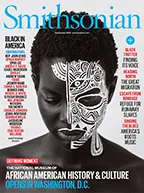
Merely by leaving, African-Americans would get to participate in democracy and, by their presence, strength the Northward to pay attention to the injustices in the South and the increasingly organized fight confronting those injustices. By leaving, they would change the course of their lives and those of their children. They would get Richard Wright the novelist instead of Richard Wright the sharecropper. They would become John Coltrane, jazz musician instead of tailor; Bill Russell, NBA pioneer instead of paper mill worker; Zora Neale Hurston, beloved folklorist instead of maidservant. The children of the Great Migration would reshape professions that, had their families not left, may never have been open to them, from sports and music to literature and art: Miles Davis, Ralph Ellison, Toni Morrison, August Wilson, Jacob Lawrence, Diana Ross, Tupac Shakur, Prince, Michael Jackson, Shonda Rhimes, Venus and Serena Williams and countless others. The people who migrated would become the forebears of most African-Americans born in the Due north and West.
The Keen Migration would expose the racial divisions and disparities that in many ways go on to plague the nation and boss headlines today, from police killings of unarmed African-Americans to mass incarceration to widely documented biases in employment, housing, wellness care and instruction. Indeed, two of the most tragically recognizable descendants of the Slap-up Migration are Emmett Till, a 14-yr-old Chicago boy killed in Mississippi in 1955, and Tamir Rice, a 12-twelvemonth-old Cleveland boy shot to decease past police in 2014 in the city where his ancestors had fled. Their fates are a reminder that the perils the people sought to escape were not confined to the S, nor to the by.
The history of African-Americans is often distilled into ii epochs: the 246 years of enslavement ending afterward the close of the Civil War, and the dramatic era of protest during the civil rights movement. Yet the Ceremonious War-to-ceremonious rights centrality tempts us to jump past a century of resistance against subjugation, and to miss the human being story of ordinary people, their hopes lifted by Emancipation, dashed at the end of Reconstruction, crushed further past Jim Crow, only to exist finally, at long concluding, revived when they found the courage within themselves to break free.
/https://tf-cmsv2-smithsonianmag-media.s3.amazonaws.com/filer/35/9a/359a8ce6-6c1b-46d1-90c6-51d206d91295/sep2016_c06_migration.jpg)
**********
A piddling male child boarded a northbound railroad train with his grandmother and extended family, along with their upright piano and the rest of their worldly possessions, stuffed within wooden crates, to begin their journey out of Mississippi. It was 1935. They were packed into the Jim Crow car, which, past custom, was at the front end of the train, the offset to absorb the bear upon in the event of a collision. They would not be permitted into the dining auto, and so they carried fried chicken and boiled eggs to tide them over for the journey.
The little boy was 4 years old and broken-hearted. He'd overheard the grown-ups talking about leaving their subcontract in Arkabutla, to start over upward due north. He heard them say they might go out him with his father'south people, whom he didn't know. In the end they took him forth. The near abandonment haunted him. He missed his mother, who would not exist joining them on this journey; she was away trying to make a stable life for herself after the breakup with his father. He did non know when he would meet her again.
His grandfather had preceded them north. He was a hardworking, serious human who kept the indignities he suffered under Jim Crow to himself. In Mississippi, he had not dared stand upwards to some white children who broke the family's wagon. He told the little boy that as black people, they had no say in that world. "There were things they could do that we couldn't," the boy would say of the white children when he was a grown human with gray hair and a son of his own.
The granddaddy was and so determined to become his family out of the Southward that he bought a plot of land sight unseen in a identify called Michigan. On the trip north, the little boy and his cousins and uncles and aunts (who were children themselves) did non quite know what Michigan was, so they made a ditty out of information technology and sang it equally they waited for the train. "Meatskin! Meatskin! Nosotros're going to Meatskin!"
They landed on freer soil, just betwixt the fears of abandonment and the trauma of being uprooted from his mother, the niggling boy arrived with a stutter. He began to speak less and less. At Sunday school, the children bellowed with laughter whenever he tried. So instead, he talked to the hogs and cows and chickens on the farm, who, he said years after, "don't intendance how you audio."
The little boy went mute for 8 years. He wrote down the answers to questions he was asked, fearing even to innovate himself to strangers, until a high school English teacher coaxed him out of his silence by having him read poesy aloud to the class. That male child was James Earl Jones. He would go on to the University of Michigan, where he abased pre-med for theater. After he would play King Lear in Primal Park and Othello on Broadway, win Tony Awards for his performances inFences and inThe Slap-up White Hope and star in films likeDr. Strangelove,Roots,Field of Dreams andComing to America.
The voice that fell silent for so long would become among the almost iconic of our time—the vocalization of Darth Vader inStar Wars, of Mufasa inThe Panthera leo King, the voice of CNN. Jones lost his vocalisation, and found it, considering of the Great Migration. "It was responsible for all that I am grateful for in my life," he told me in a recent interview in New York. "Nosotros were reaching for our gilded mines, our freedom."
**********
The desire to be free is, of class, human and universal. In America, enslaved people had tried to escape through the Underground Railroad. Later on, one time freed on paper, thousands more, known as Exodusters, fled the fierce white backlash post-obit Reconstruction in a short-lived migration to Kansas in 1879.
But full-bodied in the S equally they were, held captive by the virtual slavery of sharecropping and debt peonage and isolated from the rest of the country in the era earlier airlines and interstates, many African-Americans had no prepare ways of making a become of it in what were then faraway alien lands.
By the opening of the 20th century, the optimism of the Reconstruction era had long turned into the terror of Jim Crow. In 1902, one black adult female in Alabama seemed to speak for the agitated hearts that would ultimately propel the coming migration: "In our homes, in our churches, wherever two or three are gathered together," she said, "at that place is a discussion of what is best to do. Must we remain in the Due south or get elsewhere? Where can we become to feel that security which other people feel? Is information technology all-time to go in great numbers or only in several families? These and many other things are discussed over and over."
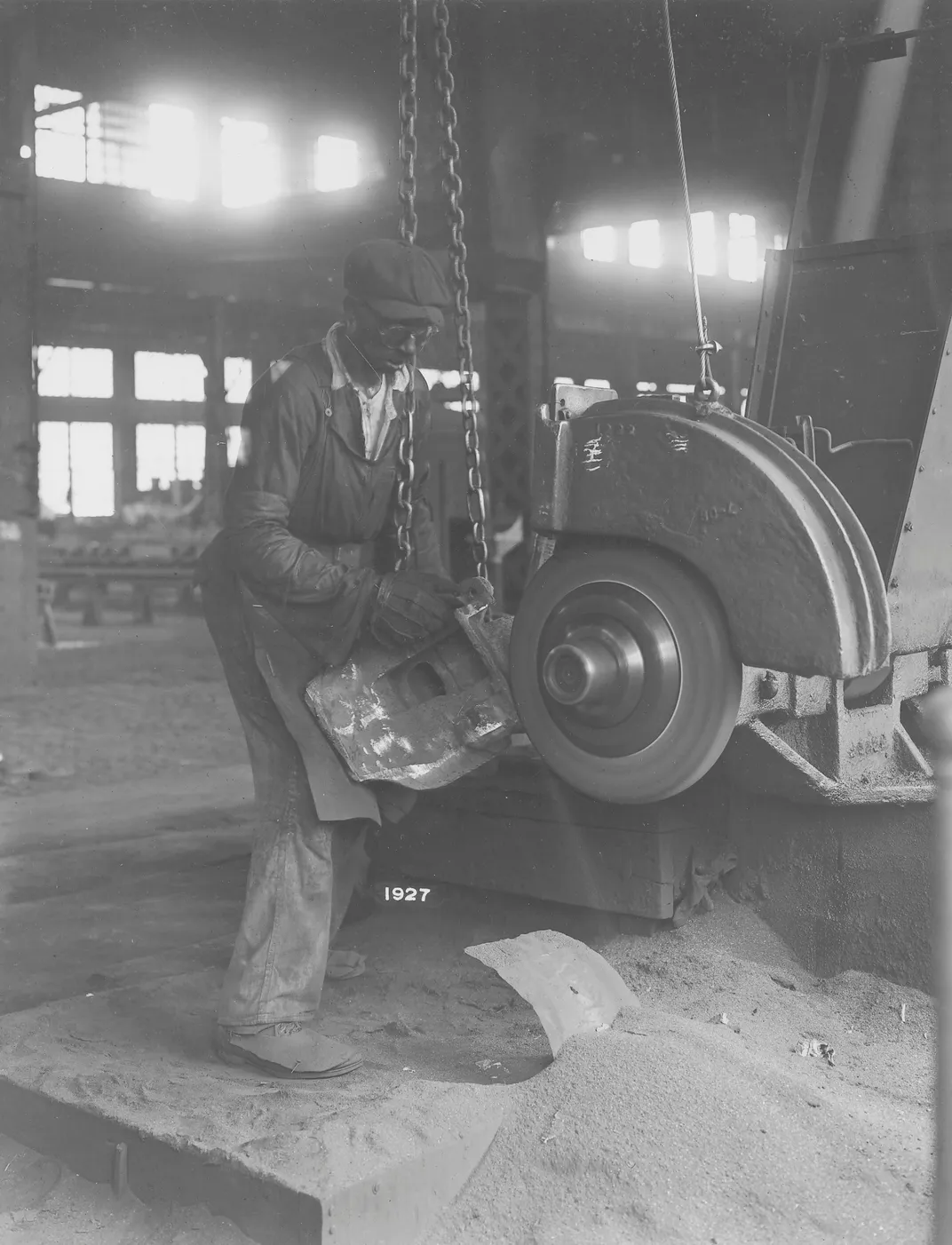
The door of escape opened during World War I, when slowing immigration from Europe created a labor shortage in the North. To fill the assembly lines, companies began recruiting black Southerners to work the steel mills, railroads and factories. Resistance in the South to the loss of its inexpensive black labor meant that recruiters ofttimes had to human activity in secret or face fines and imprisonment. In Macon, Georgia, for example, a recruiter's license required a $25,000 fee plus the unlikely recommendations of 25 local businessmen, ten ministers and ten manufacturers. Simply word shortly spread among black Southerners that the Due north had opened up, and people began devising means to go out on their own.
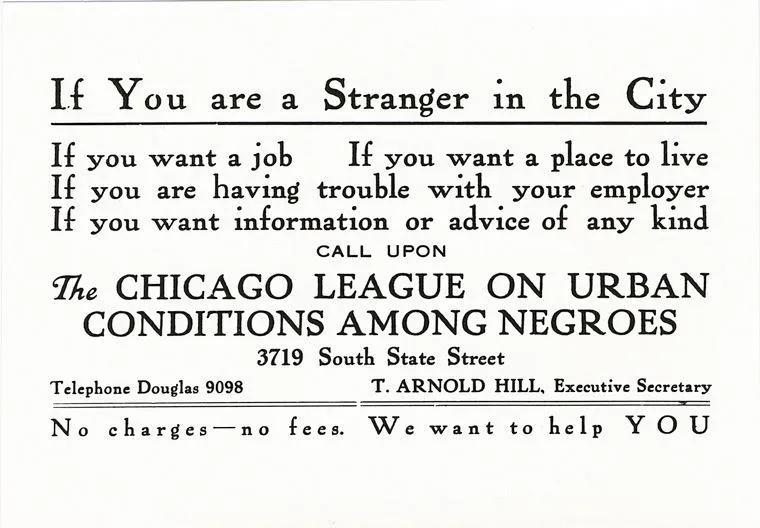
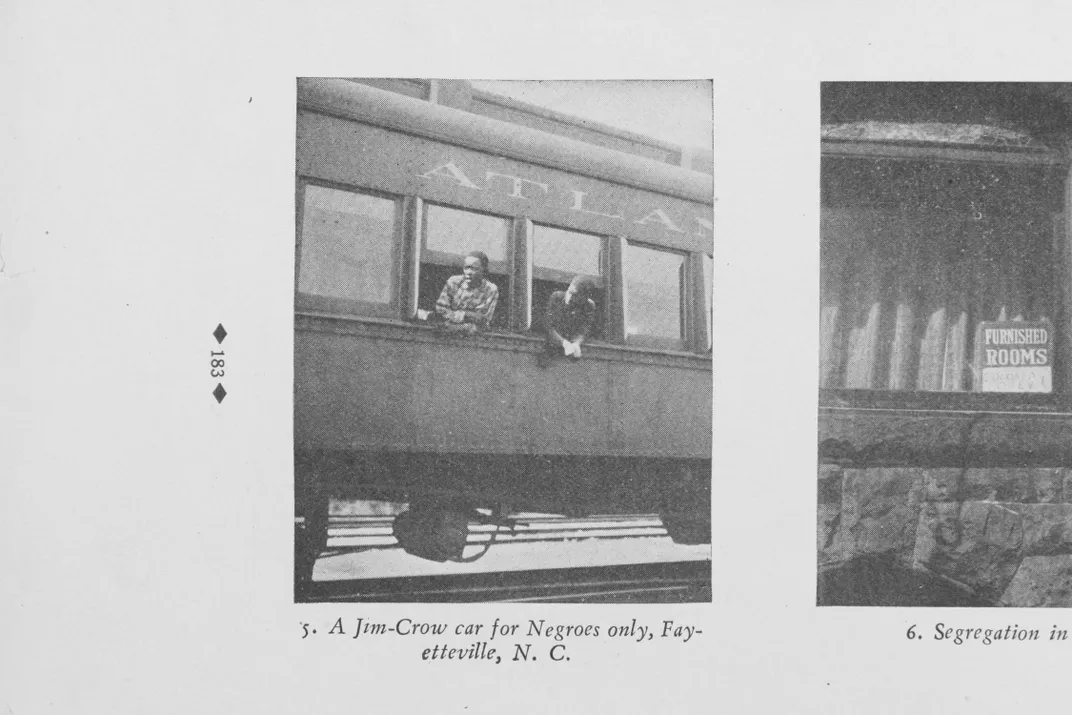
Southern authorities then tried to continue African-Americans from leaving by arresting them at the railroad platforms on grounds of "vagrancy" or tearing up their tickets in scenes that presaged tragically thwarted escapes from backside the Iron Curtain during the Cold War. And all the same they left.
On i of the early trains out of the South was a sharecropper named Mallie Robinson, whose husband had left her to care for their young family nether the rule of a harsh plantation owner in Cairo, Georgia. In 1920, she gathered up her five children, including a babe withal in diapers, and, with her sister and brother-in-police force and their children and three friends, boarded a Jim Crow train, and another, and another, and didn't become off until they reached California.
They settled in Pasadena. When the family moved into an all-white neighborhood, a cross was burned on their forepart backyard. But here Mallie's children would get to integrated schools for the full year instead of segregated classrooms in between laborious hours chopping and picking cotton wool. The youngest, the one she had carried in her arms on the train out of Georgia, was named Jackie, who would become on to earn 4 letters in athletics in a single twelvemonth at UCLA. Later on, in 1947, he became the first African-American to play Major League Baseball.
Had Mallie not persevered in the face of hostility, raising a family of half-dozen alone in the new world she had traveled to, we might not have ever known his name. "My mother never lost her composure," Jackie Robinson one time recalled. "Equally I grew older, I often thought about the backbone it took for my mother to suspension away from the South."
/https://tf-cmsv2-smithsonianmag-media.s3.amazonaws.com/filer/12/ba/12ba7fd7-b0a4-4a57-884f-475ebc4db34c/sep2016_c04_migration.jpg)
Mallie was extraordinary in another manner. Well-nigh people, when they left the South, followed 3 main tributaries: the first was up the East Coast from Florida, Georgia, the Carolinas and Virginia to Washington, D.C., Baltimore, Philadelphia, New York and Boston; the 2nd, up the state's central spine, from Alabama, Mississippi, Tennessee and Arkansas to St. Louis, Chicago, Cleveland, Detroit and the unabridged Midwest; the third, from Louisiana and Texas to California and the Western states. But Mallie took 1 of the farthest routes in the continental U.Southward. to get to freedom, a westward journey of more than ii,200 miles.
The trains that spirited the people away, and set the course for those who would come by bus or auto or foot, acquired names and legends of their ain. Maybe the near celebrated were those that rumbled forth the Illinois Central Railroad, for which Abraham Lincoln had worked every bit a lawyer earlier his ballot to the White House, and from which Pullman porters distributed copies of theChicago Defender in undercover to blackness Southerners hungry for information about the North. The Illinois Central was the primary route for those fleeing Mississippi for Chicago, people like Muddy Waters, the dejection legend who fabricated the journey in 1943 and whose music helped ascertain the genre and pave the way for rock 'n' whorl, and Richard Wright, a sharecropper'southward son from Natchez, Mississippi, who got on a train in 1927 at the age of nineteen to feel what he called "the warmth of other suns."
In Chicago, Wright worked washing dishes and sweeping streets before landing a job at the post office and pursuing his dream equally a writer. He began to visit the library: a correct and pleasure that would have been unthinkable in his home state of Mississippi. In 1940, having made it to New York, he publishedNative Son to national acclaim, and, through this and other works, became a kind of poet laureate of the Great Migration. He seemed never to have forgotten the heartbreak of leaving his homeland and the courage he mustered to step into the unknown. "We look up at the high Southern sky," Wright wrote in12 1000000 Black Voices. "We scan the kind, blackness faces nosotros have looked upon since nosotros offset saw the light of day, and, though pain is in our hearts, we are leaving."
Zora Neale Hurston arrived in the N along the East Coast stream from Florida, although, every bit was her way, she broke convention in how she got at that place. She had grown upward every bit the willful younger daughter of an exacting preacher and his long-suffering wife in the all-black town of Eatonville. After her mother died, when she was 13, Hurston bounced betwixt siblings and neighbors until she was hired as a maid with a traveling theater troupe that got her north, dropping her off in Baltimore in 1917. From there, she made her way to Howard University in Washington, where she got her showtime story published in the literary magazineStyluswhile working odd jobs as a waitress, maid and manicurist.
She continued on to New York in 1925 with $1.50 to her name. She would become the offset blackness student known to graduate from Barnard Higher. There, she majored in English and studied anthropology, but was barred from living in the dormitories. She never complained. In her landmark 1928 essay "How Information technology Feels to Exist Colored Me," she mocked the absurdity: "Sometimes, I feel discriminated against, simply it does not make me aroused," she wrote. "It just astonishes me. How can any deny themselves the pleasure of my company? It'due south beyond me."
She arrived in New York when the Harlem Renaissance, an artistic and cultural flowering in the early years of the Slap-up Migration, was in total blossom. The influx to the New York region would extend well beyond the Harlem Renaissance and draw the parents or grandparents of, among so many others, Denzel Washington (Virginia and Georgia), Ella Fitzgerald (Newport News, Virginia), the artist Romare Bearden (Charlotte, Due north Carolina), Whitney Houston (Blakeley, Georgia), the rapper Tupac Shakur (Lumberton, Northward Carolina), Sarah Vaughan (Virginia) and Althea Gibson (Clarendon County, South Carolina), the tennis champion who, in 1957, became the first black player to win at Wimbledon.
From Aiken, Southward Carolina, and Bladenboro, Due north Carolina, the migration drew the parents of Diahann Carroll, who would become the first blackness woman to win a Tony Laurels for best actress and, in 1968, to star in her own television show in a function other than a domestic. Information technology was in New York that the mother of Jacob Lawrence settled afterward a winding journey from Virginia to Atlantic Urban center to Philadelphia and then on to Harlem. Once there, to keep teenage Jacob safe from the streets, she enrolled her eldest son in an subsequently-schoolhouse arts plan that would set the form of his life.
Lawrence would get on to create "The Migration Serial"—threescore painted panels, brightly colored like the throw rugs his mother kept in their tenement apartment. The paintings would get not only the all-time-known images of the Neat Migration but among the near recognizable images of African-Americans in the 20th century.
/https://tf-cmsv2-smithsonianmag-media.s3.amazonaws.com/filer/5b/4a/5b4a1d92-ddf6-40a5-adac-040af2eaea8b/sep2016_c03_migration.jpg)
**********
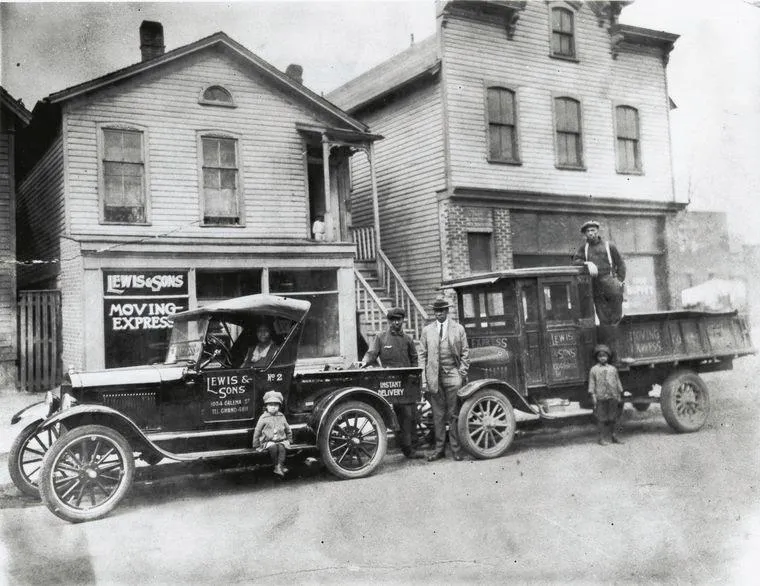
Yet throughout the migration, wherever black Southerners went, the hostility and hierarchies that fed the Southern caste arrangement seemed to carry over into the receiving stations in the New World, as the cities of the North and West erected barriers to black mobility. There were "sundown towns" throughout the country that banned African-Americans afterwards nighttime. The constitution of Oregon explicitly prohibited blackness people from entering the state until 1926; whites-only signs could still be seen in shop windows into the 1950s.
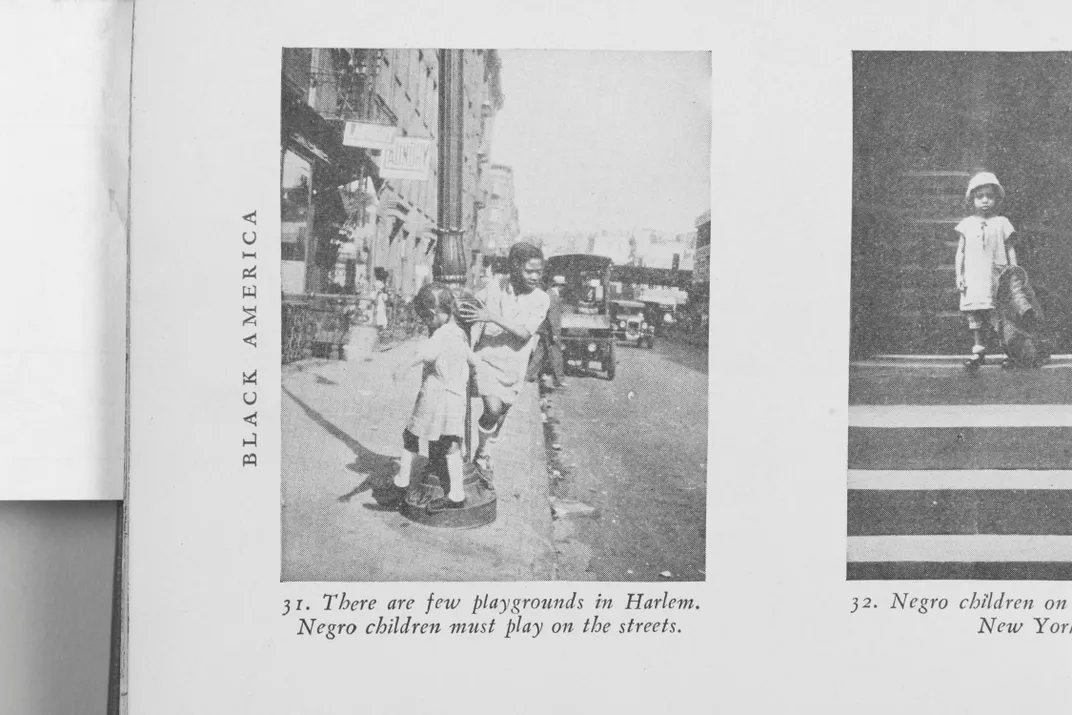
Even in the places where they were permitted, blacks were relegated to the lowest-paying, most dangerous jobs, barred from many unions and, at some companies, hired merely as strike breakers, which served to further carve up blackness workers from white. They were bars to the about dilapidated housing in the to the lowest degree desirable sections of the cities to which they fled. In densely populated destinations like Pittsburgh and Harlem, housing was so scarce that some black workers had to share the same single bed in shifts.
When African-Americans sought to move their families to more favorable conditions, they faced a hardening structure of policies and community designed to maintain racial exclusion. Restrictive covenants, introduced as a response to the influx of blackness people during the Great Migration, were clauses written into deeds that outlawed African-Americans from buying, leasing or living in properties in white neighborhoods, with the exception, often explicitly spelled out, of servants. By the 1920s, the widespread use of restrictive covenants kept as much as 85 percent of Chicago off-limits to African-Americans.
At the same time, redlining—the federal housing policy of refusing to approve or guarantee mortgages in areas where black people lived—served to deny them access to mortgages in their own neighborhoods. These policies became the pillars of a residential caste system in the Due north that calcified segregation and wealth inequality over generations, denying African-Americans the hazard accorded other Americans to improve their lot.
In the 1930s, a black couple in Chicago named Carl and Nannie Hansberry decided to fight these restrictions to make a better life for themselves and their iv immature children. They had migrated n during Globe War I, Carl from Mississippi and Nannie from Tennessee. He was a real manor broker, she was a schoolteacher, and they had managed to save up enough to buy a domicile.
They plant a brick 3-flat with bay windows in the all-white neighborhood of Woodlawn. Although other black families moving into white neighborhoods had endured firebombings and mob violence, Carl wanted more space for his family and bought the house in secret with the help of progressive white real estate agents he knew. He moved the family belatedly in the spring of 1937. The couple'south youngest daughter, Lorraine, was 7 years old when they outset moved, and she later described the vitriol and violence her family met in what she chosen a "hellishly hostile 'white neighborhood' in which literally howling mobs surrounded our firm." At i point a mob descended on the home to throw bricks and cleaved concrete, narrowly missing her head.
But non content simply to terrorize the Hansberrys, neighbors then filed a lawsuit, forcing the family unit to move out, backed by state courts and restrictive covenants. The Hansberrys took the case to the Supreme Court to challenge the restrictive covenants and to render to the firm they bought. The case culminated in a 1940 Supreme Courtroom decision that was 1 of a series of cases that together helped strike a blow against segregation. But the hostility continued.
Lorraine Hansberry later recalled being "spat at, cursed and pummeled in the daily trek to and from school. And I also remember my drastic and mettlesome mother, patrolling our household all night with a loaded German Luger, doggedly guarding her four children, while my father fought the respectable part of the boxing in the Washington court."
In 1959, Hansberry's playA Raisin in the Lord's day, about a black family on Chicago's S Side living in dilapidated housing with few better options and at odds over what to practise later the death of the patriarch, became the commencement play written by an African-American woman to be performed on Broadway. The fight past those who migrated and those who marched somewhen led to the Fair Housing Act of 1968, which made such discriminatory practices illegal. Carl Hansberry did not live to see information technology. He died in 1946 at historic period 50 while in United mexican states City, where, disillusioned with the boring speed of progress in America, he was working on plans to move his family to Mexico.
**********
The Great Migration laid bare tensions in the Due north and Westward that were not as far removed from the South as the people who migrated might have hoped. Martin Luther Rex Jr., who went n to study in Boston, where he met his wife, Coretta Scott, experienced the depth of Northern resistance to blackness progress when he was campaigning for fair housing in Chicago decades after the Hansberrys' fight. He was leading a march in Marquette Park, in 1966, amid fuming crowds. 1 placard said: "King would look good with a knife in his back." A protester hurled a rock that hit him in the head. Shaken, he fell to one knee. "I have seen many demonstrations in the South," he told reporters. "But I have never seen anything so hostile and so hateful equally I've seen hither today."
Out of such turmoil arose a political consciousness in a people who had been excluded from borough life for nearly of their history. The disaffected children of the Bang-up Migration grew more outspoken about the worsening conditions in their places of refuge. Amongst them was Malcolm X, born Malcolm Little in 1925 in Omaha, Nebraska, to a lay government minister who had journeyed north from Georgia, and a mother built-in in Grenada. Malcolm was 6 years sometime when his male parent, who was under continuous attack by white supremacists for his role fighting for civil rights in the North, died a violent, mysterious expiry that plunged the family into poverty and dislocation.
Despite the upheaval, Malcolm was accomplished in his predominantly white school, but when he shared his dream of becoming a lawyer, a teacher told him that the law was "no realistic goal for a north-----." He dropped out presently afterward.
He would proceed to become known equally Detroit Red, Malcolm X and el-Hajj Malik el-Shabazz, a journey from militancy to humanitarianism, a vocalization of the dispossessed and a counterweight to Martin Luther King Jr. during the ceremonious rights motion.
At around the aforementioned time, a radical movement was brewing on the West Declension. Huey Newton was the impatient son of a preacher and itinerant laborer who left Louisiana with his family for Oakland, after his begetter was nigh lynched for talking back to a white overseer. Huey was a toddler when they arrived in California. There, he struggled in schools sick-equipped to handle the influx of newcomers from the Southward. He was pulled to the streets and into juvenile crime. Information technology was only afterwards high school that he truly learned to read, but he would go on to earn a PhD.
In college he read Malcolm X and met classmate Bobby Seale, with whom, in 1966, he founded the Black Panther Political party, built on the ideas of political action first laid out by Stokely Carmichael. The Panthers espoused self-determination, quality housing, health care and full employment for African-Americans. They ran schools and fed the poor. But they would get known for their steadfast and militant conventionalities in the right of African-Americans to defend themselves when under assault, every bit had been their lot for generations in the Jim Crow Southward and was increasingly in the North and West.
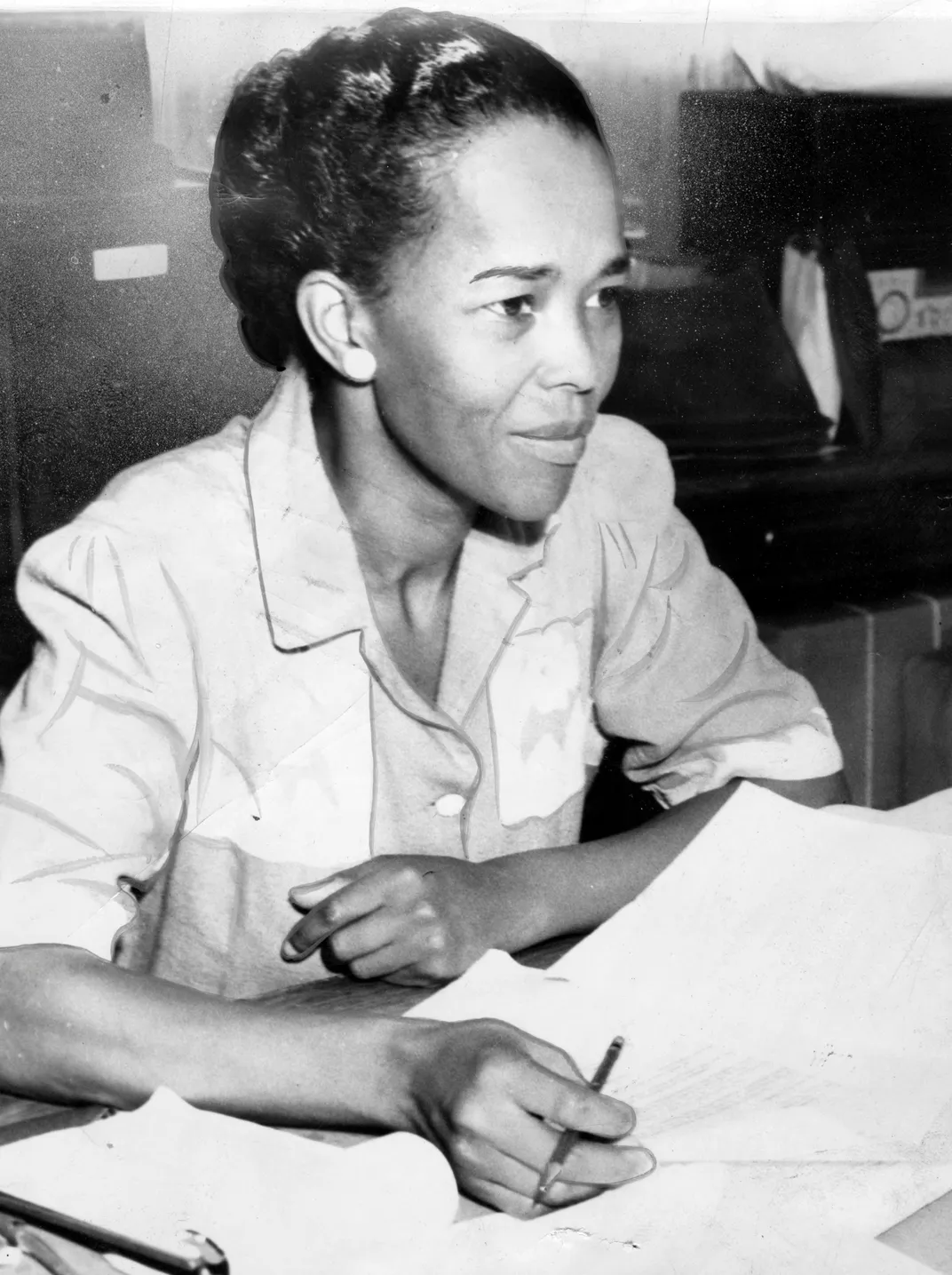
Maybe few participants of the Great Migration had as deep an impact on activism and social justice without earning the commensurate recognition for her office as Ella Baker. She was born in 1903 in Norfolk, Virginia, to devout and aggressive parents and grew upwards in Due north Carolina. After graduating from Shaw Academy, in Raleigh, she left for New York in 1927. In that location she worked equally a waitress, manufactory worker and editorial assistant before becoming active in the NAACP, where she somewhen rose to national director.
Bakery became the quiet shepherd of the ceremonious rights movement, working alongside Martin Luther King Jr., Thurgood Marshall and W.E.B. DuBois. She mentored the likes of Stokely Carmichael and Rosa Parks and helped to create the Student Nonviolent Coordinating Committee—the network of college students who risked their lives to integrate buses and register blacks to vote in the virtually dangerous parts of the South. She helped guide almost every major event in the civil rights era, from the Montgomery double-decker boycott to the march in Selma to the Freedom Rides and the student sit down-ins of the 1960s.
Baker was amongst those who suggested to King, then still in his 20s, that he take the move beyond Alabama after the success of the bus boycott and press for racial equality throughout the South. She had a neat understanding that a movement would need Southern origins in gild for participants not to exist dismissed as "Northern agitators." Rex was at first reluctant to push his followers in the aftermath of the taxing 381-twenty-four hour period cold-shoulder, merely she believed that momentum was crucial. The modern ceremonious rights movement had begun.
Baker devoted her life to working at the footing level in the South to organize the nonviolent demonstrations that helped modify the region she had left but not forsaken. She directed students and sharecroppers, ministers and intellectuals, but never lost a fervent conventionalities in the ability of ordinary people to change their destiny. "Give light," she once said, "and people volition find the way."
**********
Over time, as the people of the Great Migration embedded themselves in their cities, they aspired to leading roles in civic life. Information technology could not have been imagined in the migration'due south early decades that the first black mayors of nearly major cities in the North and West would not be longtime Northerners, as might accept been expected, merely rather children of the Great Migration, some having worked the Southern fields themselves.
The homo who would get the beginning black mayor of Los Angeles, Tom Bradley, was born on a cotton wool plantation in Calvert, Texas, to sharecroppers Crenner and Lee Thomas Bradley. The family migrated to Los Angeles when he was 7 years erstwhile. Once at that place his father abandoned the family, and his mother supported him and his iv siblings working as a maid. Bradley grew upwardly on Central Artery amongst the growing colony of black arrivals from the S. He became a rail star at UCLA and afterward joined the Los Angeles law strength, rising to lieutenant, the highest rank immune African-Americans in the 1950s.
Seeing limits on his advancement, he went to law school at night, won a seat on the city quango, and was elected mayor in 1973, serving v consecutive terms.
His proper name would become a office of the political lexicon subsequently he ran for governor of California in 1982. Polls had overestimated support for him due to what was believed to exist the reluctance of white voters to exist truthful with pollsters near their intention to vote for his white opponent, George Deukmejian. To this day, in an election involving a not-white candidate, the discrepancy between polling numbers and final outcomes due to the misleading poll responses of white voters is known as the "Bradley Event." In the 1982 election that Bradley had been favored to win, he lost past a unmarried percentage point.
Still, he would describe Los Angeles, the place that drew his family out of Texas, every bit "the metropolis of hope and opportunity." He said, "I am a living case of that."
**********
The story of African-Americans on this soil cannot exist told without the Great Migration. For many of them, the 20th century was largely an era of migrating and marching until liberty, by law and in their hearts, was won. Its mission over, the migration ended in the 1970s, when the S had sufficiently changed so that African-Americans were no longer nether force per unit area to leave and were free to live anywhere they chose. From that time, to the current day, a new narrative took concur in popular thought that has seized primarily on geographical census data, gathered every ten years, showing that since 1975 the Southward has witnessed a cyberspace increase of African-Americans, many drawn (like other Americans) to job opportunities and a lower cost of living, but also to the call of their ancestral homeland, enacting what has come to exist called a "reverse migration."
The phrase and phenomenon have captured the attention of demographers and journalists alike who revisit the trend afterward each new census. One written report went so far as to draw it every bit "an evacuation" from the Northern cities by African-Americans back to the place their forebears had fled. Just the demographics are more circuitous than the narrative oft portrayed. While hundreds of thousands of African-Americans take left Northern cities, they have not fabricated a trail to the farms and hamlets where their ancestors may have picked cotton fiber but to the biggest cities of the Due south—Atlanta, Houston, Dallas—which are now more cosmopolitan and thus more like their Northern counterparts. Many others have not headed South at all simply have fanned out to suburbs or smaller cities in the North and Due west, places similar Las Vegas, Columbus, Ohio, or even Ferguson, Missouri. Indeed, in the twoscore years since the migration ended, the proportion of the South that is African-American has remained unchanged at about 20 percent—far from the seismic bear upon of the Great Migration. And so "reverse migration" seems non just an overstatement simply misleading, as if relocating to an employer'southward Houston role were equivalent to running for ane'southward life on the Illinois Central.
Richard Wright relocated several times in his quest for other suns, fleeing Mississippi for Memphis and Memphis for Chicago and Chicago for New York, where, living in Greenwich Village, barbers refused to serve him and some restaurants refused to seat him. In 1946, well-nigh the height of the Bang-up Migration, he came to the disheartening recognition that, wherever he went, he faced hostility. Then he went to France. Similarly, African-Americans today must navigate the social fault lines exposed past the Great Migration and the country's reactions to it: white flight, police brutality, systemic ills flowing from government policy restricting fair admission to safety housing and good schools. In recent years, the North, which never had to face its own injustices, has moved toward a crunch that seems to take reached a boiling point in our current twenty-four hours: a catalog of videotaped assaults and killings of unarmed black people, from Rodney Male monarch in Los Angeles in 1991, Eric Garner in New York in 2014, Philando Castile outside St. Paul, Minnesota, this summer, and beyond.
Thus the eternal question is: Where can African-Americans become? It is the aforementioned question their ancestors asked and answered, only to discover upon arriving that the racial caste organization was not Southern but American.
And and then it was in these places of refuge that Black Lives Matter arose, a largely Northern- and Western-born protest movement confronting persistent racial discrimination in many forms. Information technology is organic and leaderless like the Keen Migration itself, begetting witness to attacks on African-Americans in the unfinished quest for equality. The natural next step in this journey has turned out to be not simply moving to some other state or geographic region but moving fully into the mainstream of American life, to be seen in one'due south full humanity, to exist able to breathe costless wherever one lives in America.
From this perspective, the Great Migration has no gimmicky geographic equivalent because it was not solely well-nigh geography. Information technology was about agency for a people who had been denied it, who had geography as the only tool at their disposal. It was an expression of faith, despite the terrors they had survived, that the country whose wealth had been created by their ancestors' unpaid labor might do correct by them.
We tin no more reverse the Keen Migration than unsee a painting past Jacob Lawrence, unhear Prince or Coltrane, eraseThe Piano Lesson, remove Mae Jemison from her spacesuit in science textbooks, deleteLove. In a curt span of fourth dimension—in some cases, over the grade of a single generation—the people of the Smashing Migration proved the worldview of the enslavers a prevarication, that the people who were forced into the field and whipped for learning to read could do far more than than selection cotton, scrub floors. Maybe, deep down, the enslavers always knew that. Possibly that is one reason they worked so hard at such a vicious organisation of subjugation. The Great Migration was thus a Declaration of Independence. It moved those who had long been invisible not just out of the South but into the light. And a tornado triggered past the wings of a sea gull can never exist unwound.
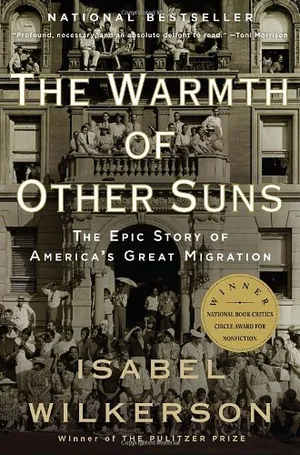
The Warmth of Other Suns: The Epic Story of America'due south Corking Migration
Source: https://www.smithsonianmag.com/history/long-lasting-legacy-great-migration-180960118/
0 Response to "what is the value of the paper back magazine on how to do it by james e. waters?"
Post a Comment